
Challenge #1 – C63, The Helix Nebula in Aquarius
| Target | Type | R. A. | Dec. | Constellation | Magnitude | Size |
| C63 (NGC 7293) | Planetary Nebula | 22h 29m 39s | -20° 50′ 15″ | Aquarius | 7.6 | 15×12 arcmins |
Overview
An astronomer called Karl Ludwig Harding is the first to have published his sighting of this nebula over 200 years ago in 1824.
This is the closest, at 655 light-years distant, and largest planetary nebula that we know of. Planetary nebulae are created when red giant stars shed outer layers of their structure into space. In the case of the Helix, we can see the remaining white dwarf star at its heart, and it is the energy from this remaining star that causes the ejected gas to fluoresce brightly.
Today, the nebula is about 2.5 light-years across, following an estimated 10,000 years of expansion from the original explosion, meaning that the gas shell is expanding at an average rate of 20 miles (31 km) per second.
The Helix nebula’s central star is has a radius of 2.5% of the sun’s, or about 10,500 miles (17,000 km). Shining at magnitude 13.5, it is visible in large enough backyard telescopes.
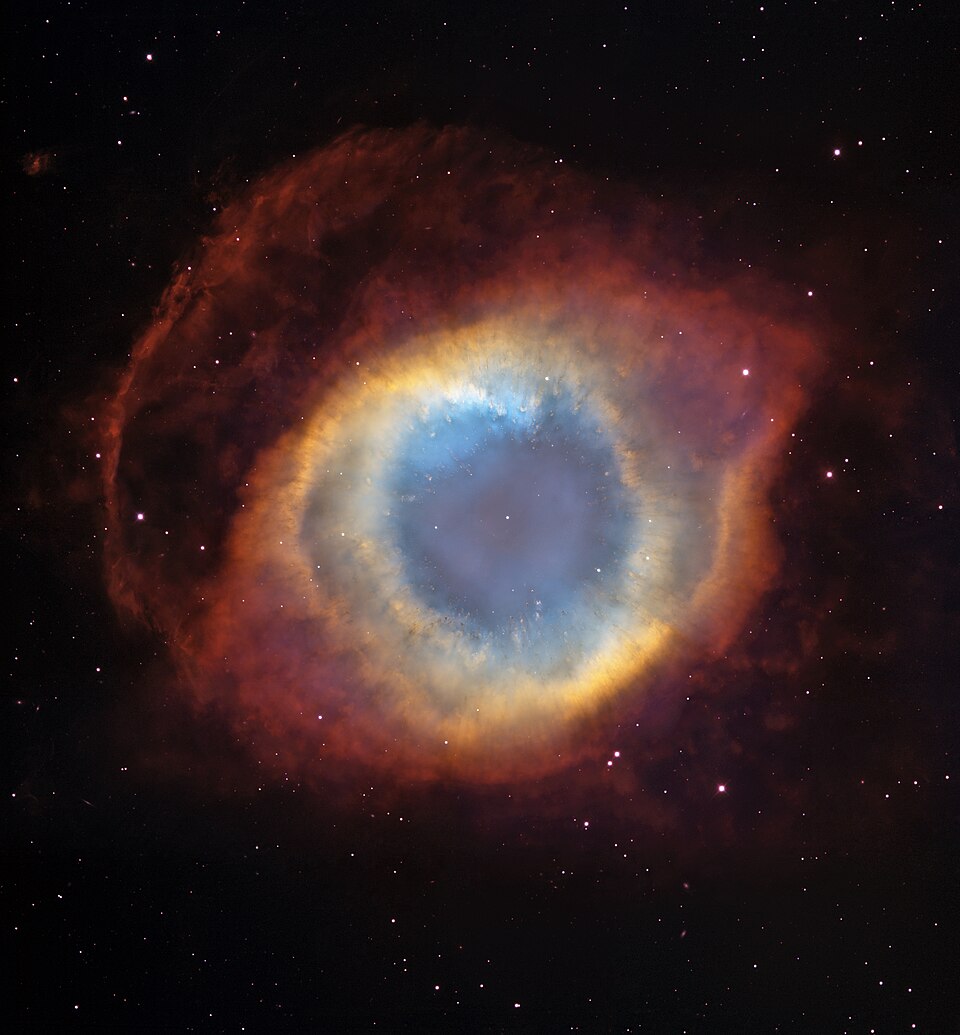
Learn how to find this impressive nebula with your telescope.
Finder Charts
This first sky chart, from SkySafari 6, which shows the sky looking south at 10:00 p.m. in mid-October. The green circle marked NGC 7293 shows the nebula’s location, and you can orientate yourself using the Great Square of Pegasus, which is marked by an orange oval.
Stars on this chart are shown to magnitude 5.0 and the moon and planets are not shown.

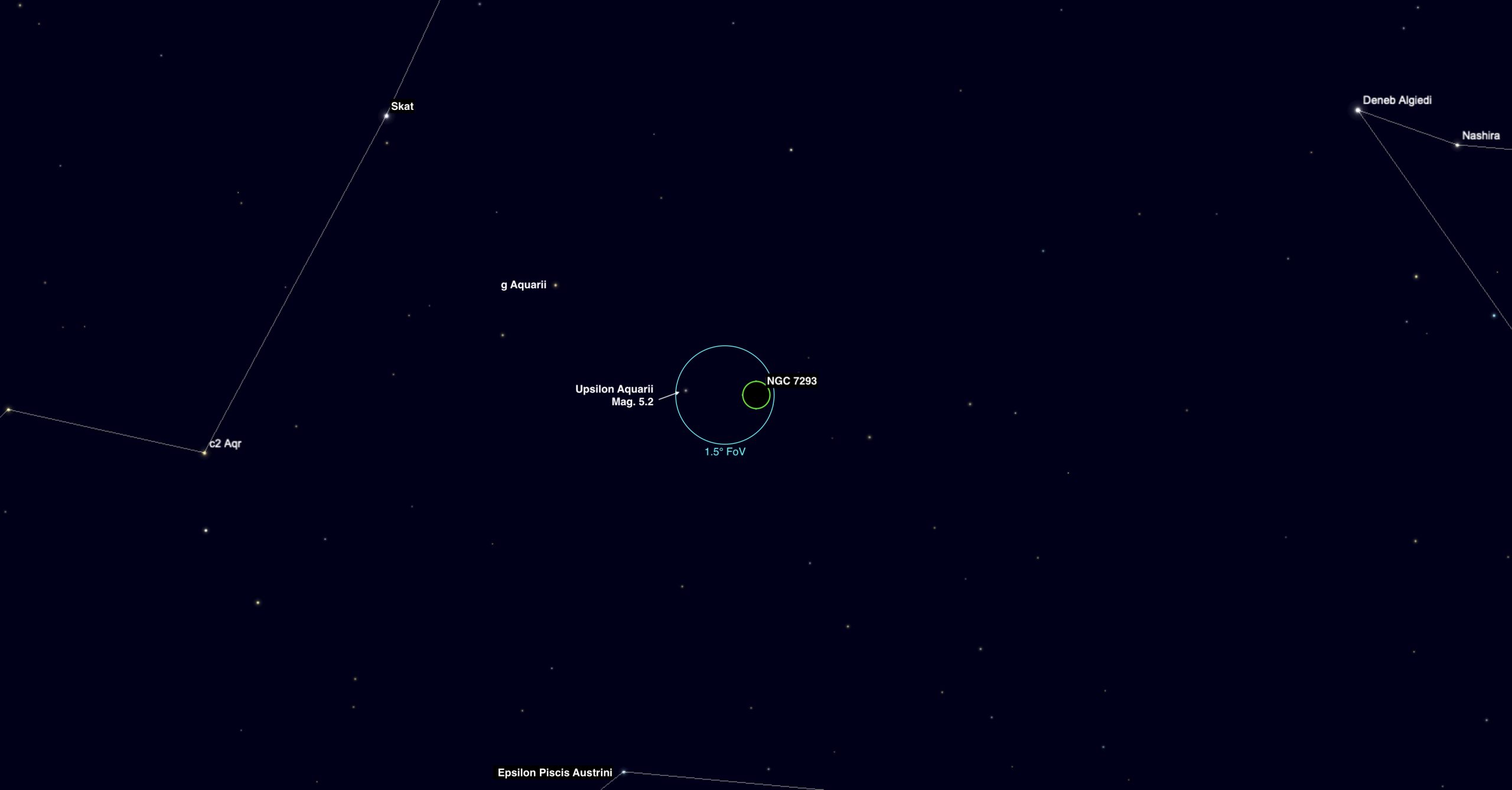
Next, identify Aquarius, in particular the bright star Skat. At magnitude 3.3, this is visible even in urban areas. Locate the fainter, but still easy-to-see g Aquarii and note from the chart below how these two stars step us along to C63.

In this third chart, stars are shown to magnitude seven, comfortably visible in binoculars and magnifying finderscopes. You can see the stars we previously located and now Upsilon Aquarii as well. This is still a naked-eye star, although you will need a darker sky to see it unaided.
Thankfully, the Helix Nebula is so large and bright – although diffuse – that if we land a 1.5° field of view (blue circle) on Upsilon Aquarii, then the nebula will also be in view. Make sure to position the star so that it’s on the eastern side of your FoV.
Now you have this nebula in your eyepiece, what should you expect to see?
Individual Telescope Views
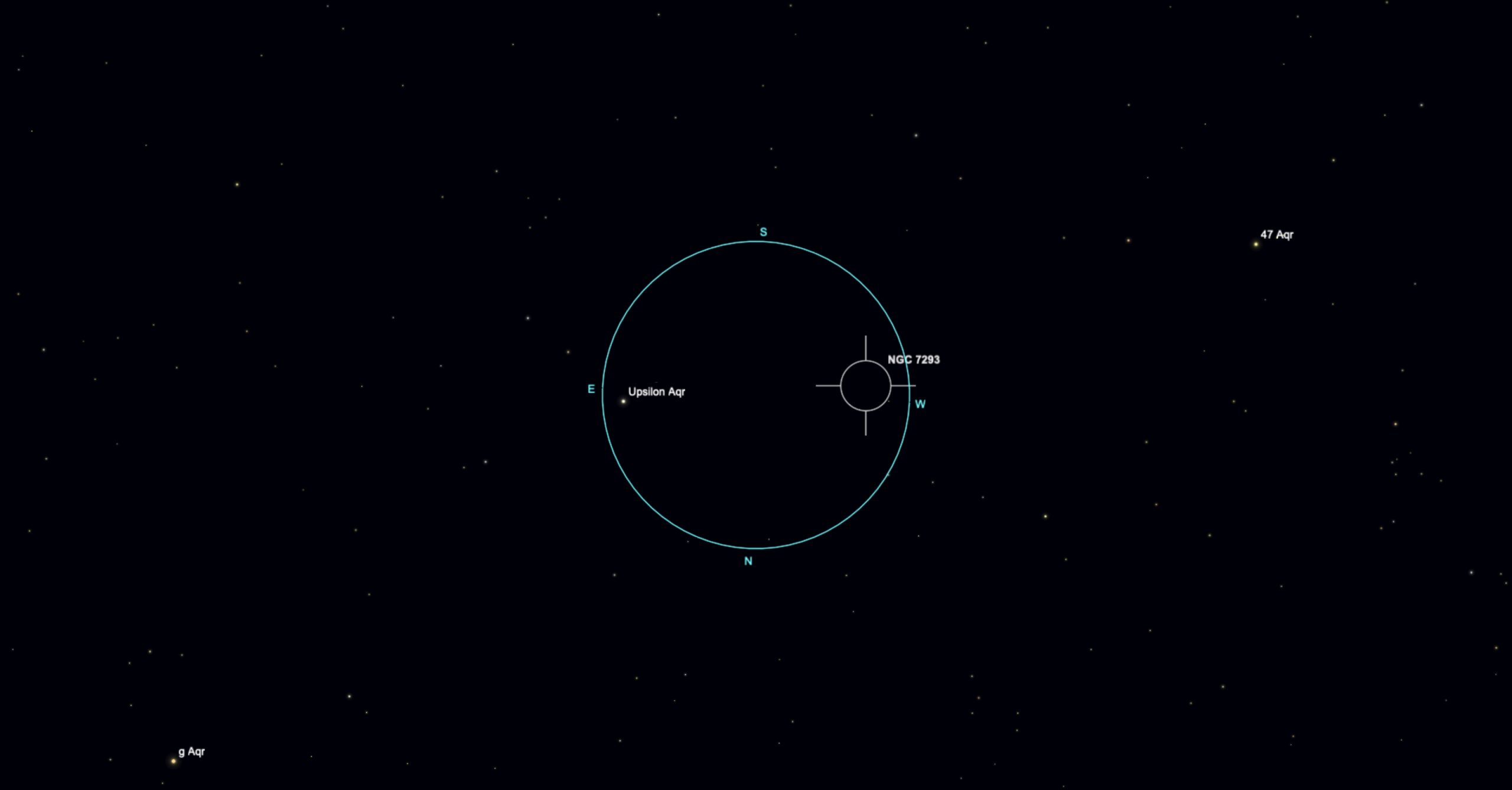
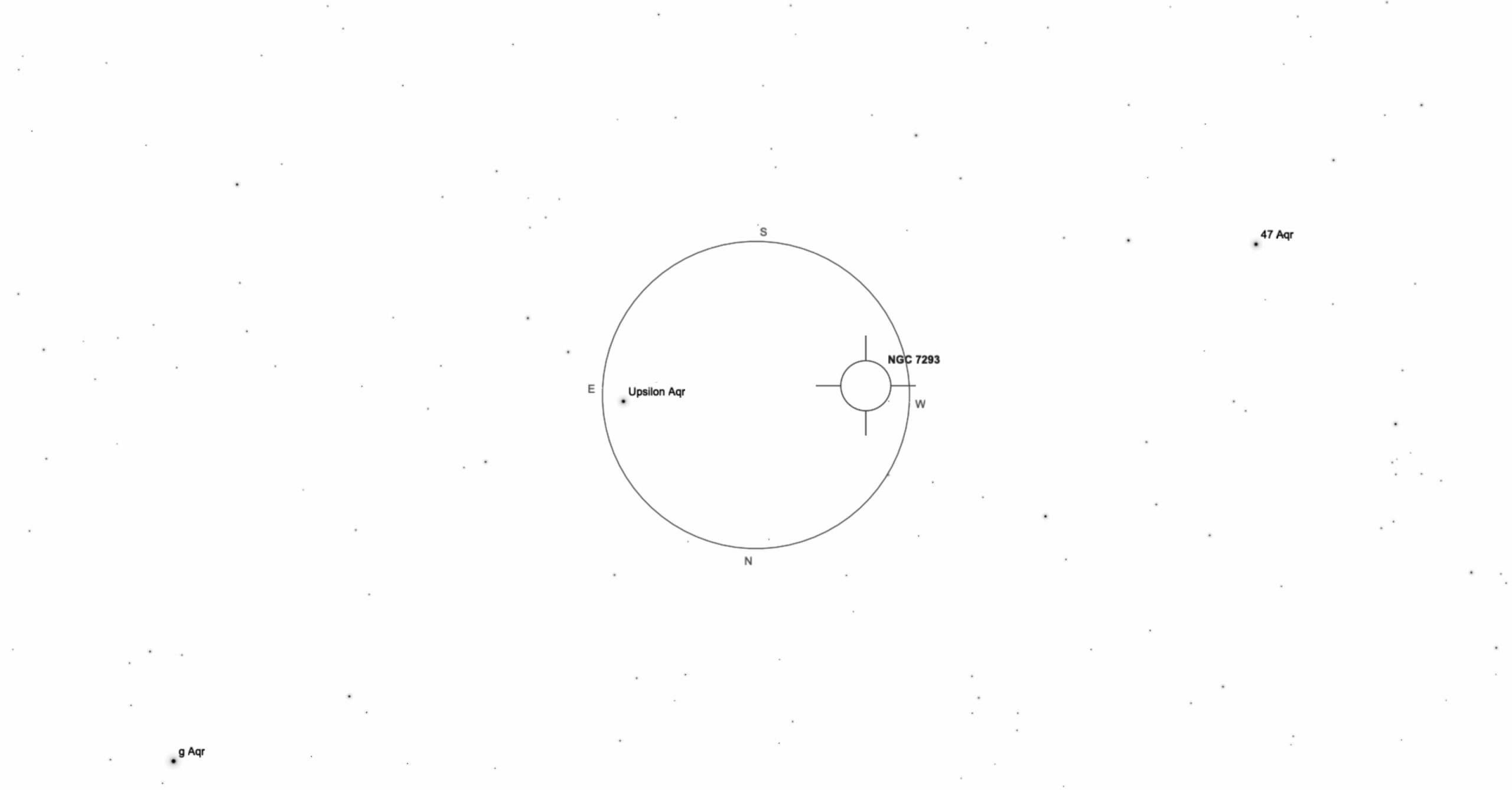
The following views will help you find C63 in different telescope types by presenting the images as your telescope will show them. The first image is with a black sky and white stars, the second picture is the same image but presented in inverse monochrome. Black stars on a white background is often easier to use at the telescope. Stars are shown to magnitude 10.0 the circle is a 1.5° field of view. The stars g and Upsilon Aquarii are shown in each view.
Each image can be clicked on for a full-screen version.
Upright View – This is what your eyes see unaided and through a reflex or red-dot finderscope
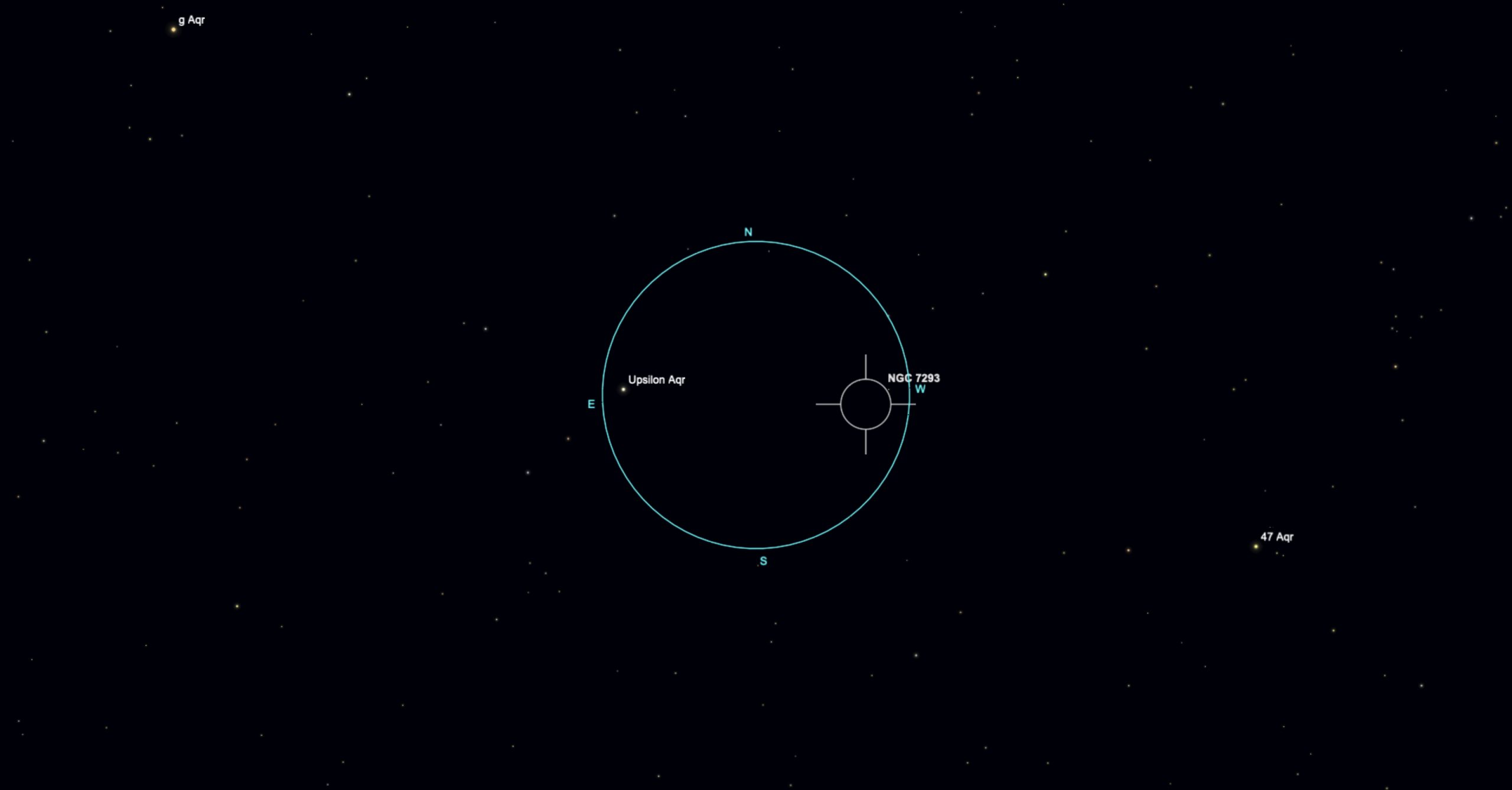
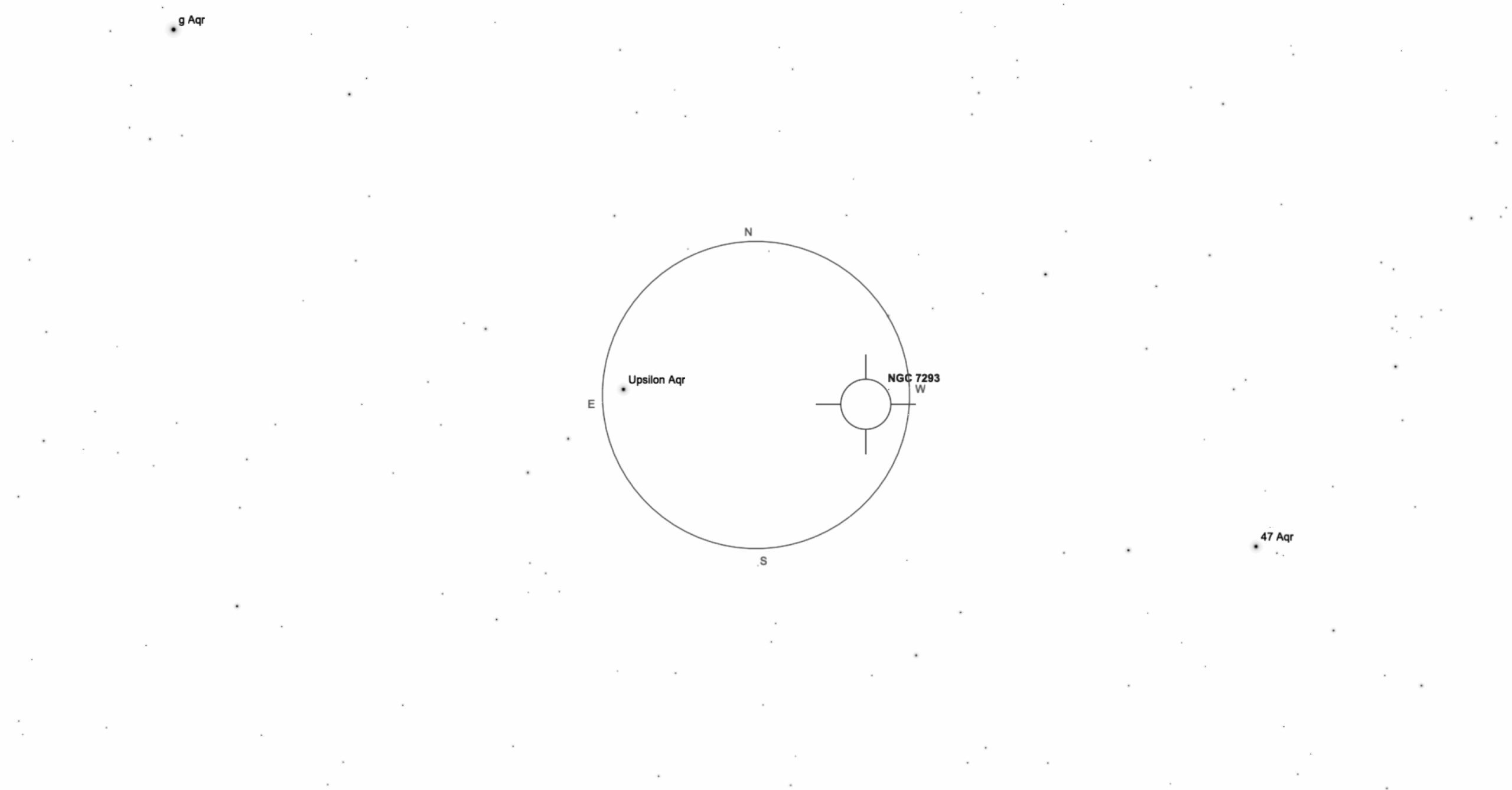
Upside-down view – This is what reflectors and magnifying finders show, and refractors / Cassegrains without a star diagonal
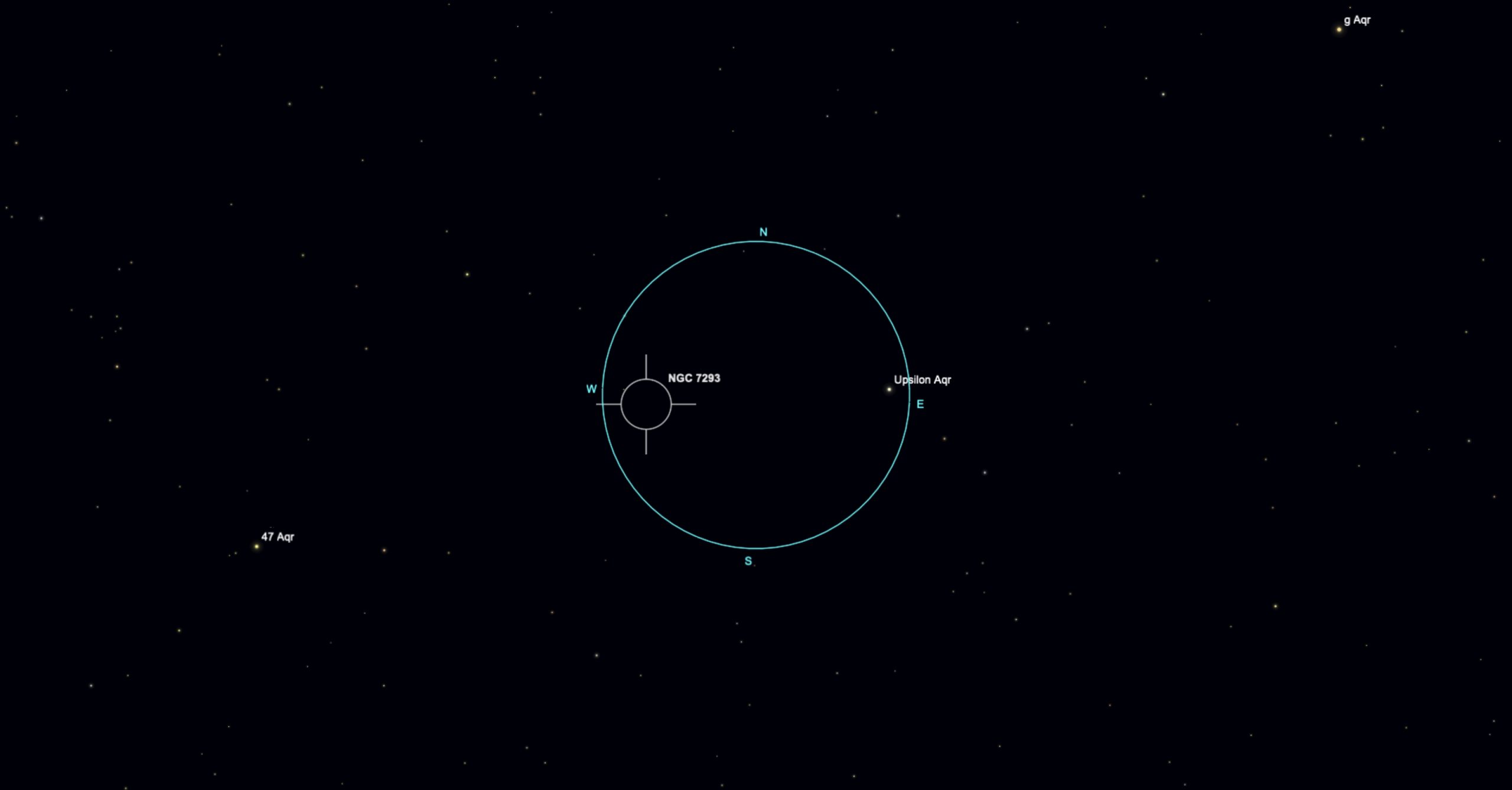
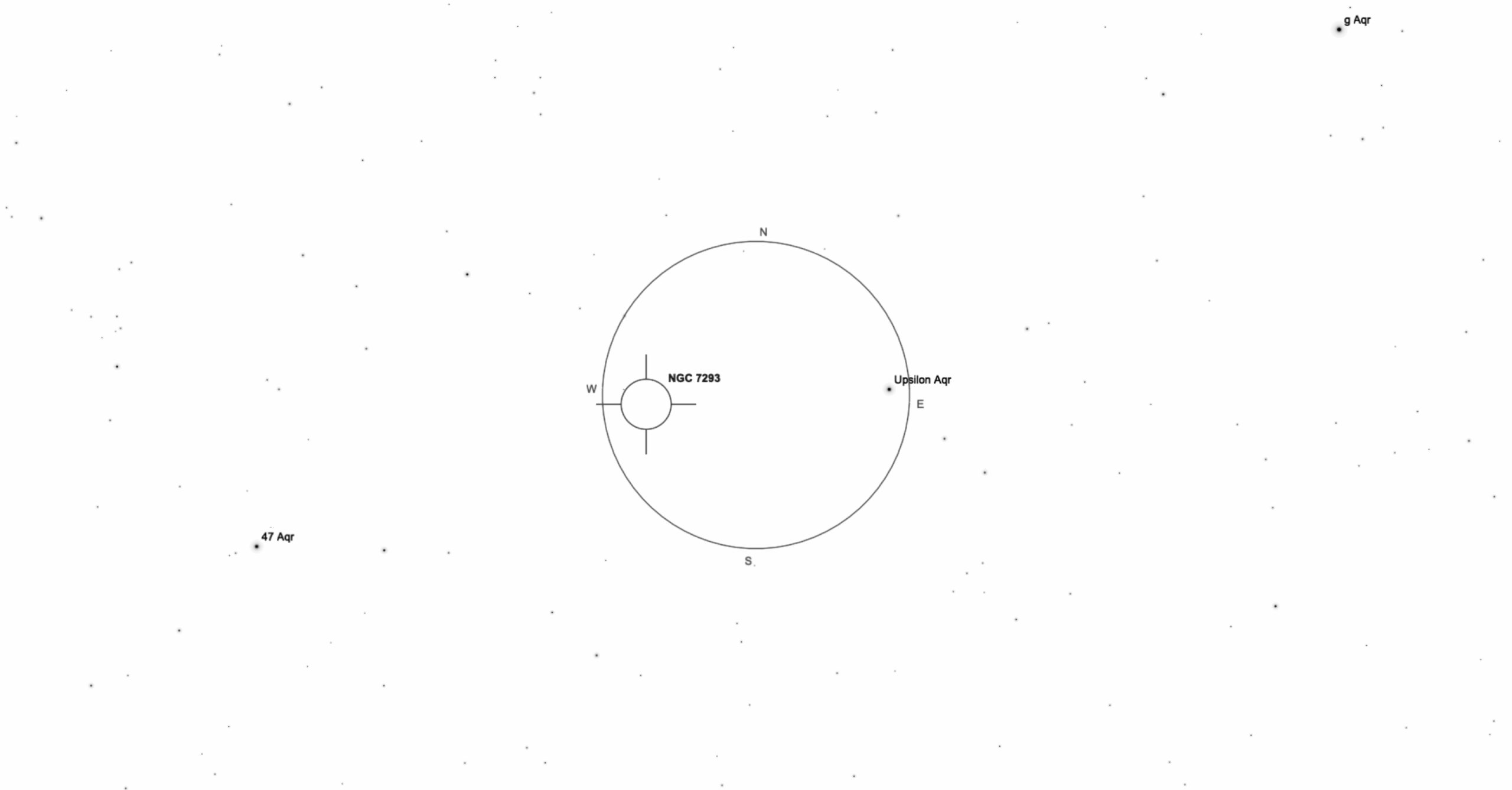
Mirrored View – Refractors and Cassegrain models with a star diagonal show this view
Observation
Technically, this is a bright object but… it’s also a large one, so that brightness is spread. And it’s a nebula, so set out on your hunt expecting it to be like searching for a ghost.
Sure enough, when you land on it at low magnification, you are going to see the apparition of a ring. There’s no denying its ephemeral nature but it is definitely there. Using averted vision brings more certainty to its structure.
For UK watchers, it might remind you of a Polo mint. For US observers, that’s a small mint shaped like a round donut.
Look at the girth of the ring and see if you can detect its varying thickness about its circumference. Look as well for areas of thicker nebulosity, parts of the donut that seem to have more ‘there-ness’ to them.
You can use higher magnification to draw out more detail, but use too much and the thin light will disappear completely. What you should be able to note is that the inner ring, i.e. the surrounding of the hole, is more dense than the outer. What other structure do you see?
Look for the white dwarf remnants of the star that created this massive globe of gas. It shines at magnitude fainter than magnitude 13 so is a harder find in smaller scopes, but most of us should be able to see it under a dark sky.
There are many faint stars embedded within the gas circle and these bring an extra dimension to the study of this spectacular sight.
PDFs for Printing
Each of the star maps above is reproduced as a pdf below. Each star map has a number in [square brackets] beneath it which corresponds to the file number below. If you want image [C63-1], for example, click the ‘download’ button next to it below and you’ll be able to open it as a printable pdf.