
Challenge #3 – C77, Centaurus A in Centaurus
| Target | Type | R. A. | Dec. | Constellation | Magnitude | Size |
| C77 (NGC 5128) | Spiral Galaxy | 13h 25m 26s | -43° 00′ 58″ | Centaurus | +6.6 | 26×20 arcmin |
Overview
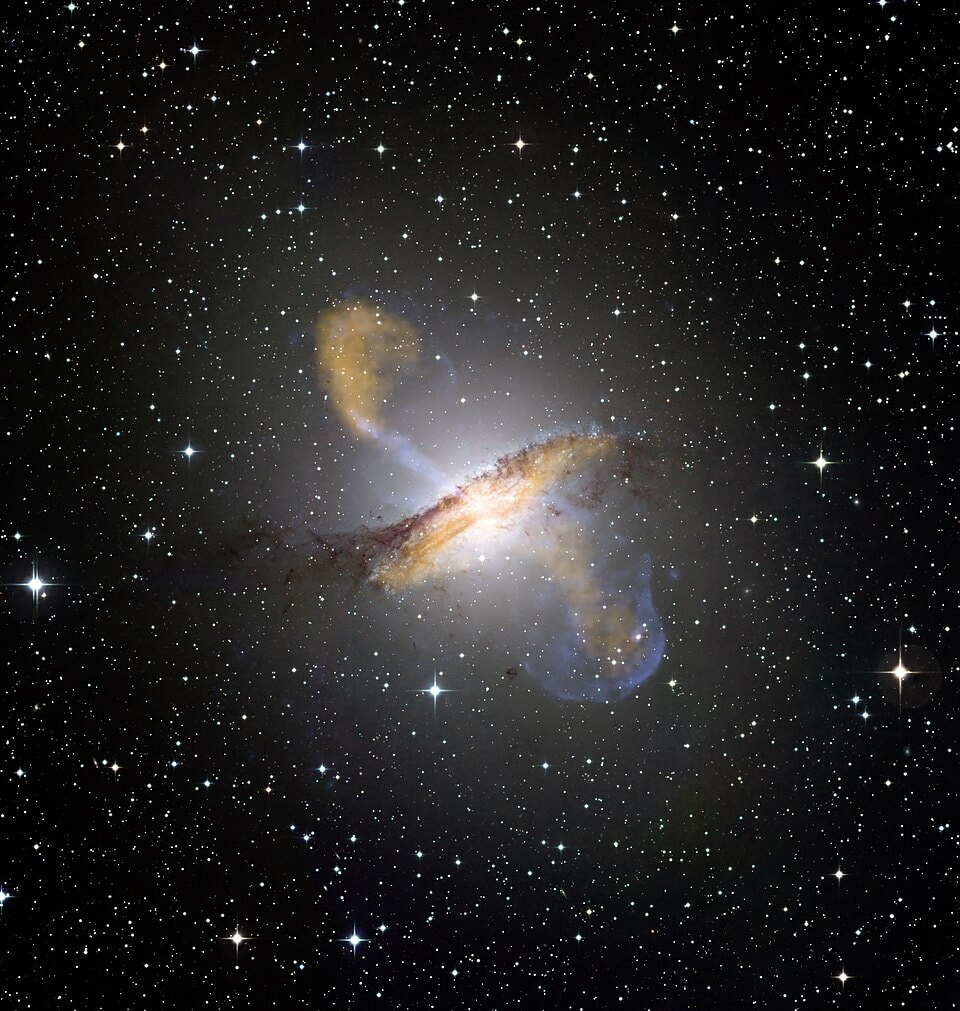
There’s a lot going on with Centaurus A, which is also known as the Hamburger Galaxy.
It was discovered in 1826 by James Dunlop and there is disagreement in astronomical literature about whether this is a lenticular or elliptical galaxy. What we do know is that at a distance on 11-13 million light-years, this is the closest radio galaxy to Earth.
The good news for amateur astronomers is that this is the fifth brightest galaxy in the sky. Less good news for members of the VAC is that it only just creeps into this Caldwell object guide because it doesn’t rise more than ten degrees above the horizon from our perspective – it is a much better object from southern latitudes.
At the center of this galaxy is a supermassive black hole with a mass of 55 million suns. It’s the jet emitted by this black hole that creates the radio signal this galaxy is famed for.
Finder Charts
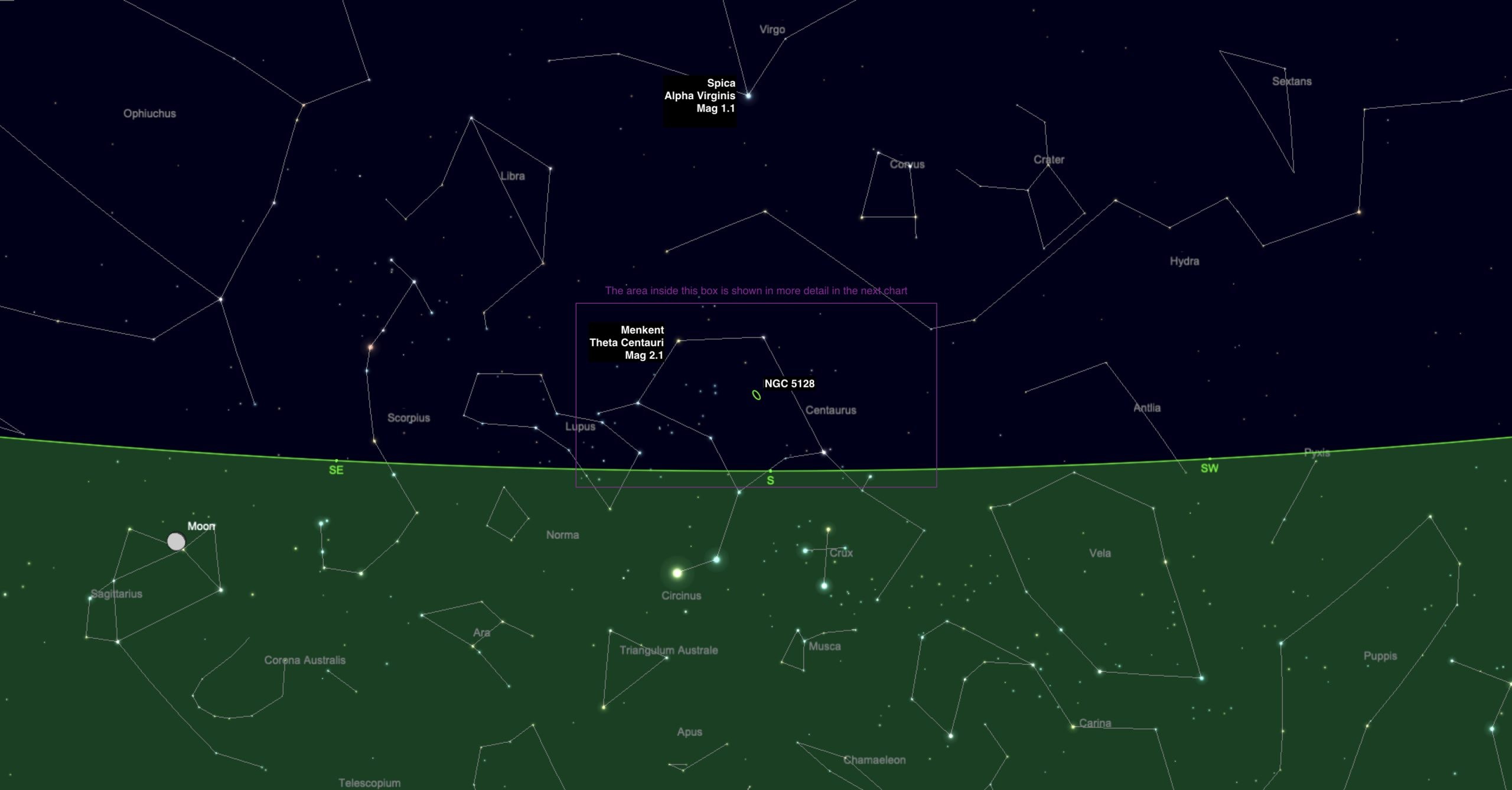
The first sky chart, from SkySafari 6, shows the view looking south at 11 pm in the middle of April, looking south. This the best month of the year for evening viewing of this galaxy but, even so, it only rises 8° over the horizon from mid-latitudes of the US.
Note the location of Spica, the brightest star in Virgo and one of the brightest in the whole night sky. Use that to point to the constellation of Centaurus straddling the horizon and its brightest star Menkent. This will be our starting point for pinning down the Hamburger Galaxy.
This first chart shows stars to magnitude 5.0, and the moon and planets are not shown.
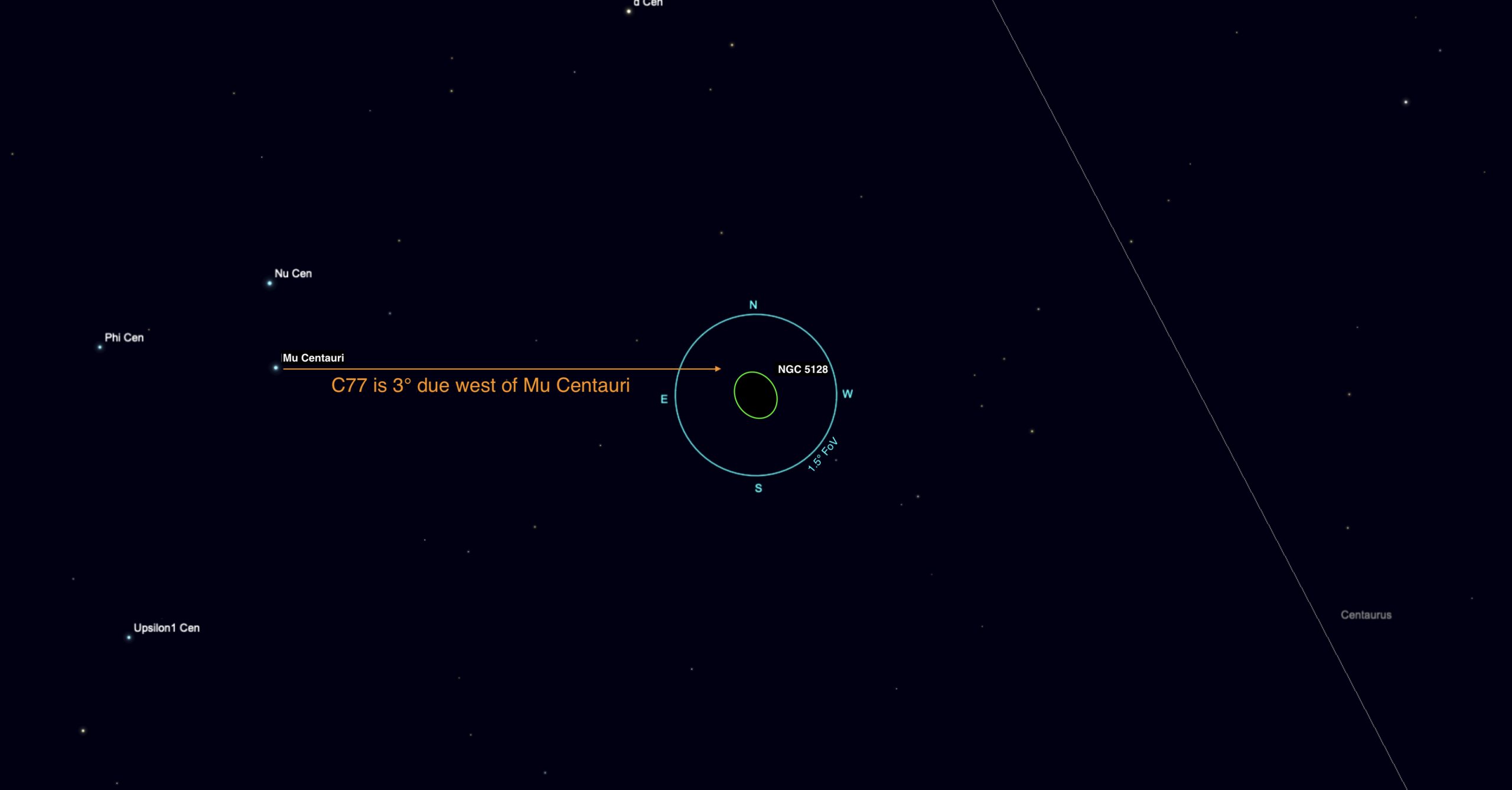
In this second chart, note the almost identically bright stars Nu and Mu Centauri. These are going to be helpful in the final step towards our galaxy.

Stars are shown to magnitude seven in this final finder chart which reveals much more of the detail. This area of sky is challengingly barren and so we need to move 3° due west – star hop using a known field of view – to discover the galaxy. This is viewable with binoculars or a magnifying finderscope but only under very good conditions.
In the eyepiece, however, it is unmistakable.
In the last section, you’ll discover what you should expect to see of this amazing galaxy once it’s in your eyepiece.
Individual Telescope Views
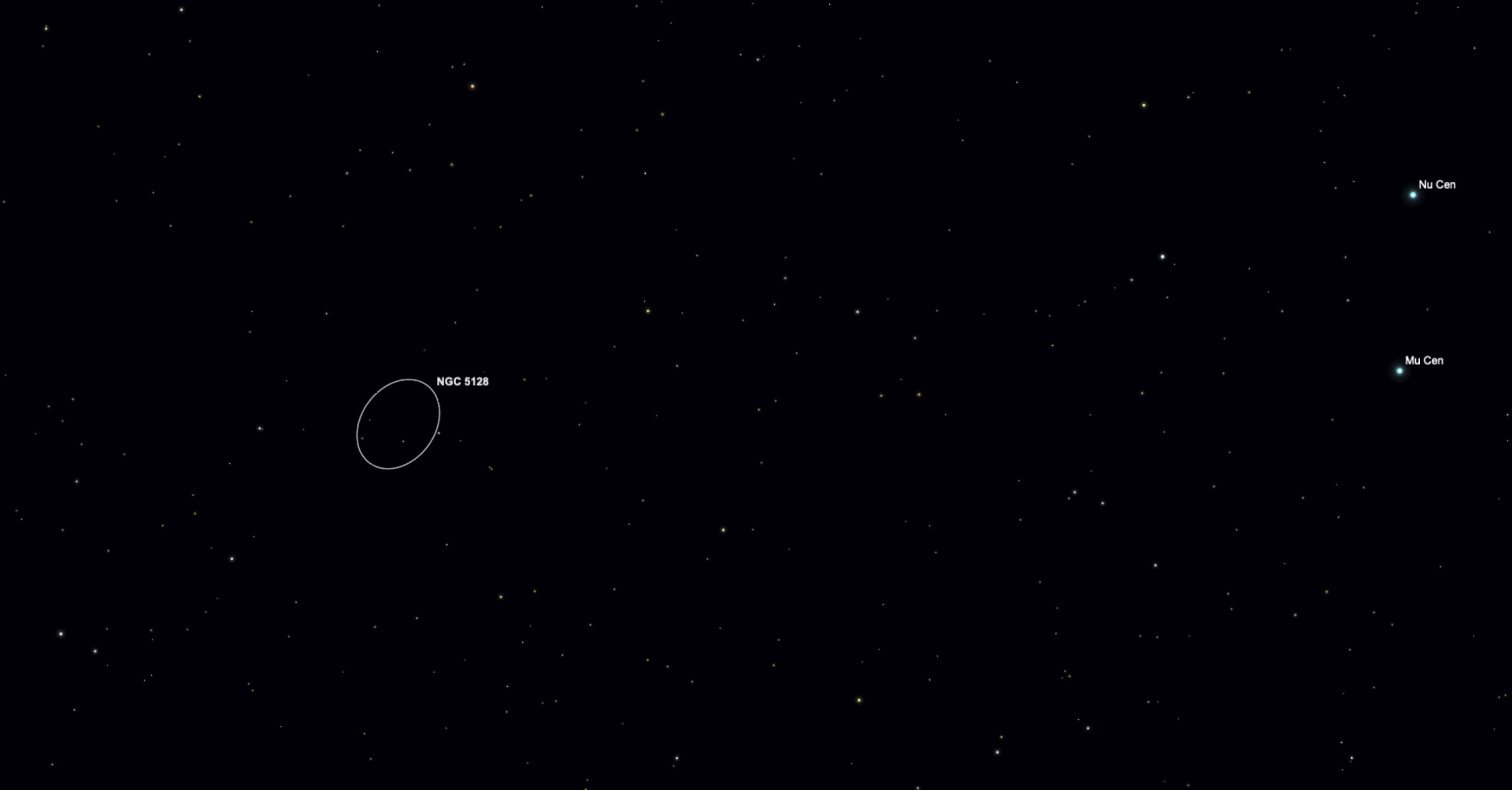
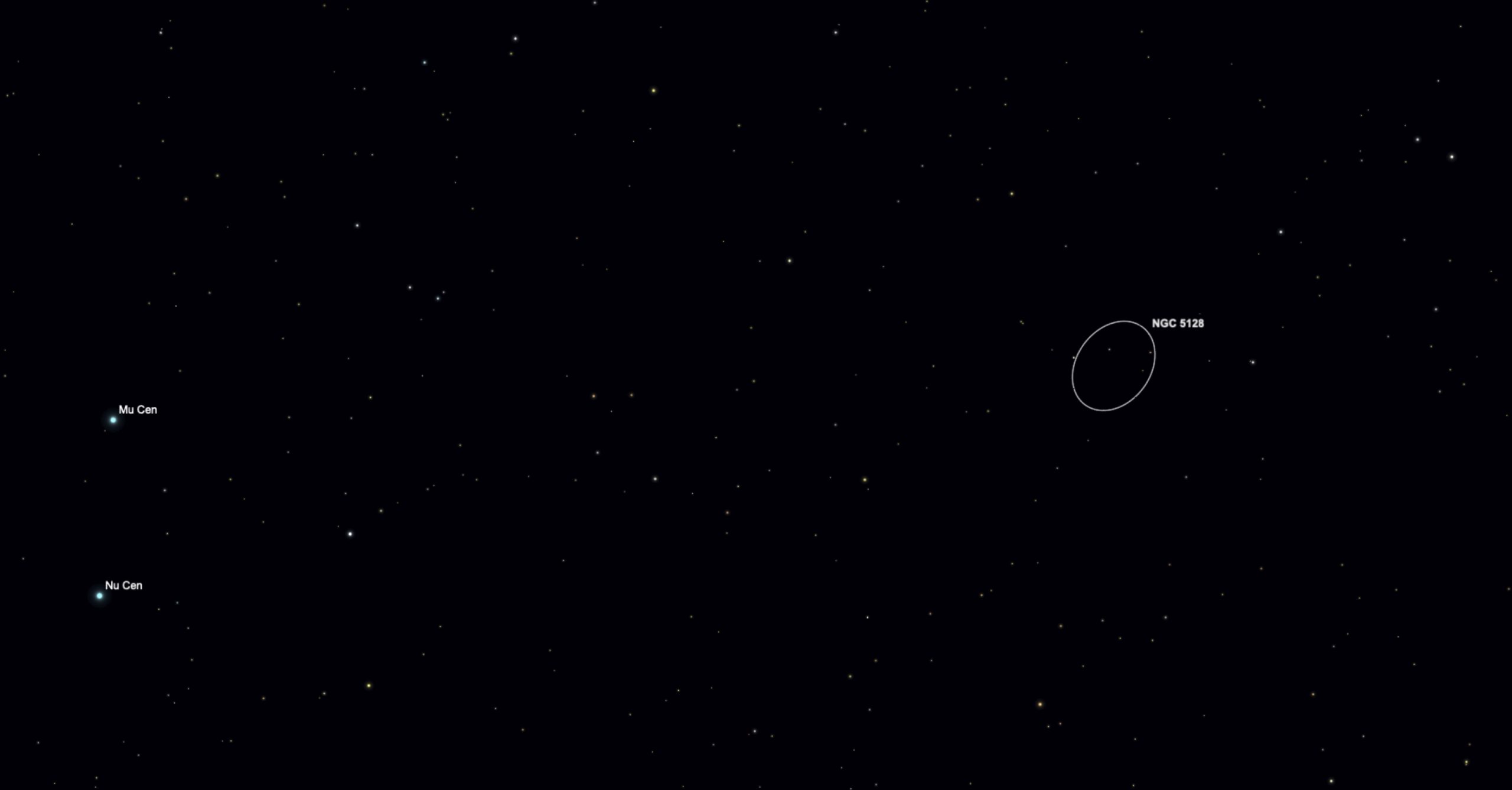
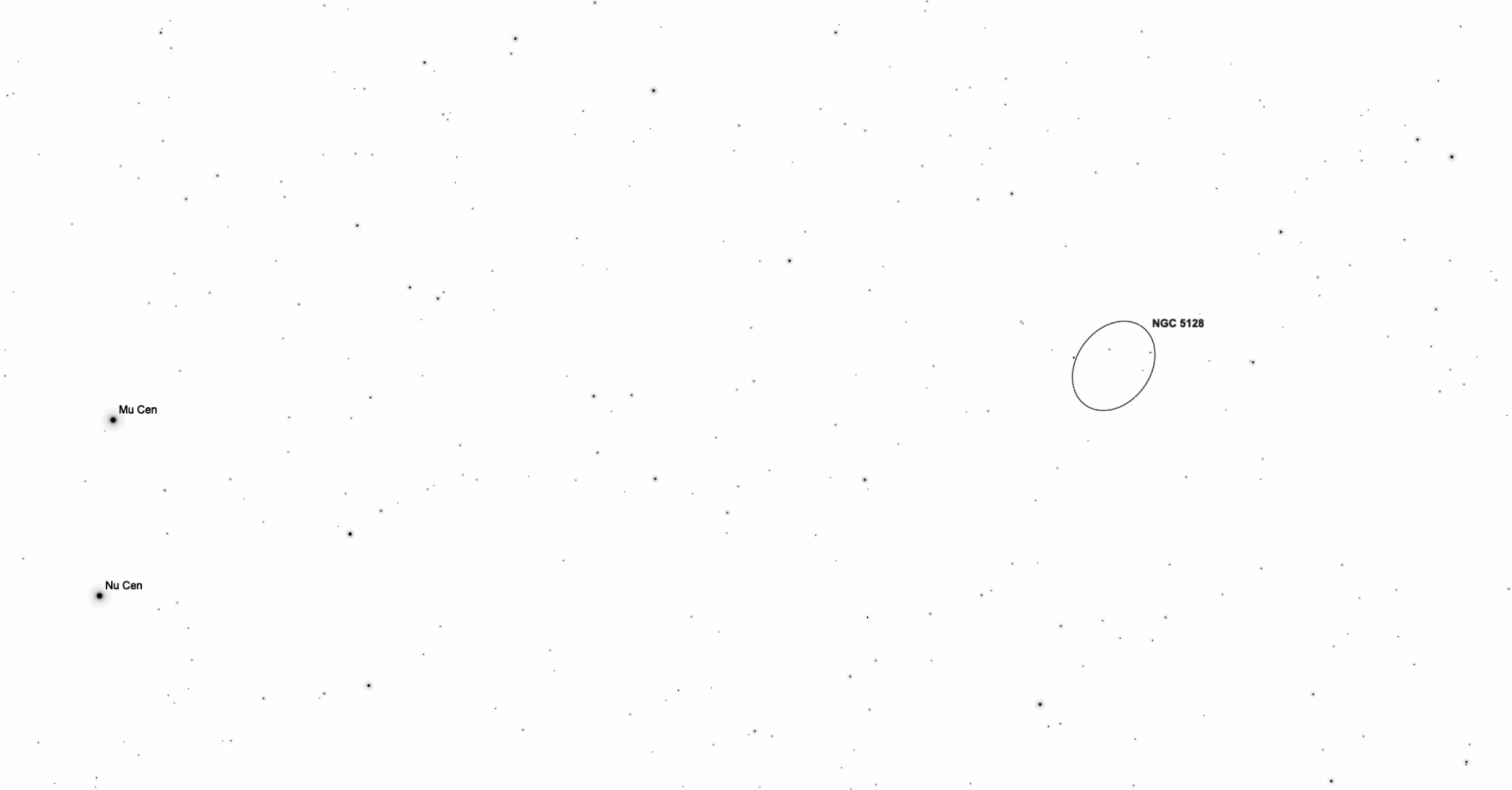
The following views will help you find C77 in different telescope types by presenting the images as your telescope will show them. The first image is with a black sky and white stars, the second picture is the same image but presented in inverse monochrome. Stars are shown to magnitude 10.0 with Nu and Mu Centauri labelled in each.
Each image can be clicked on for a full-screen version.
Upright View – This is what your eyes see unaided and through a reflex or red-dot finderscope
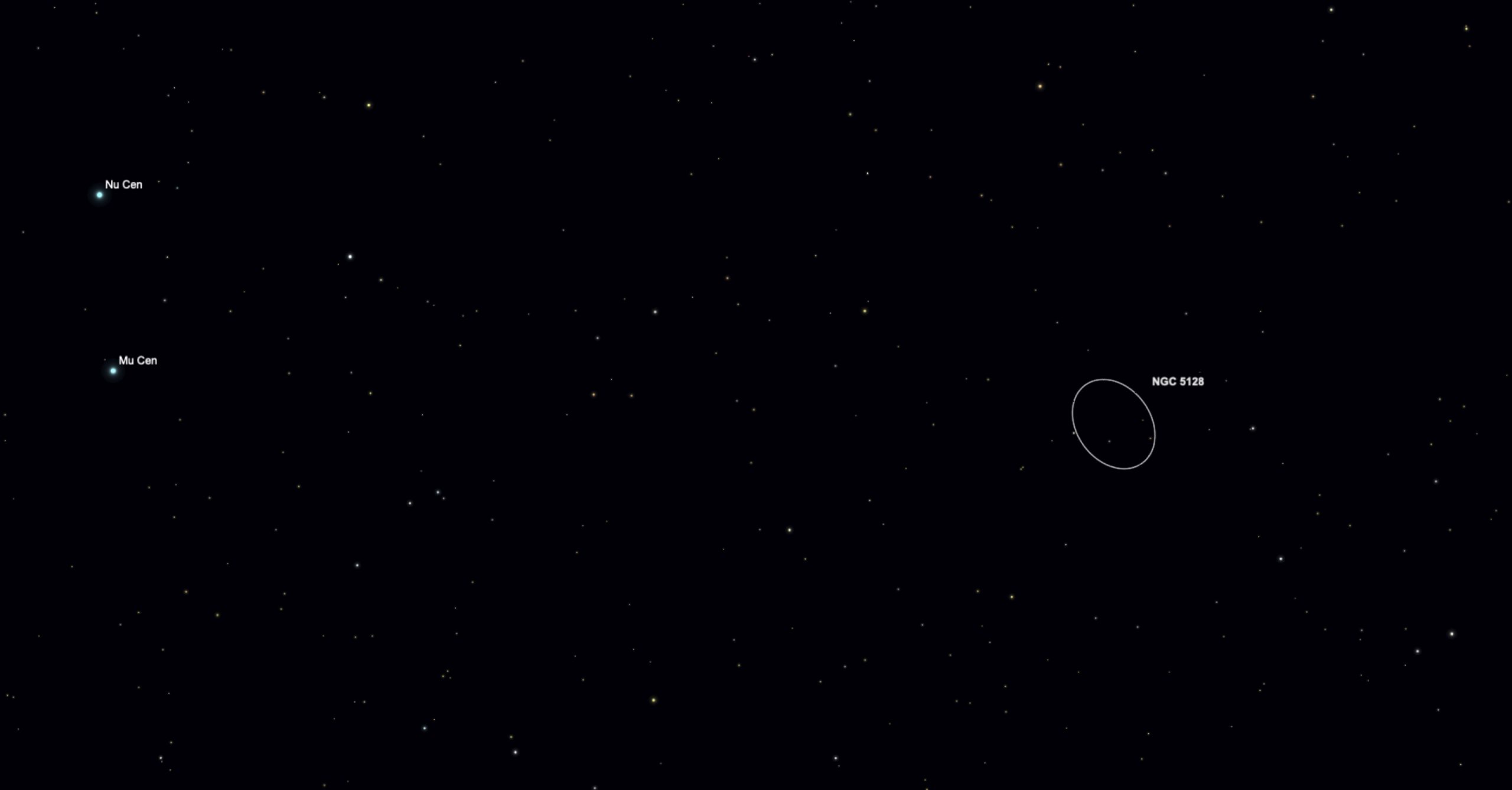
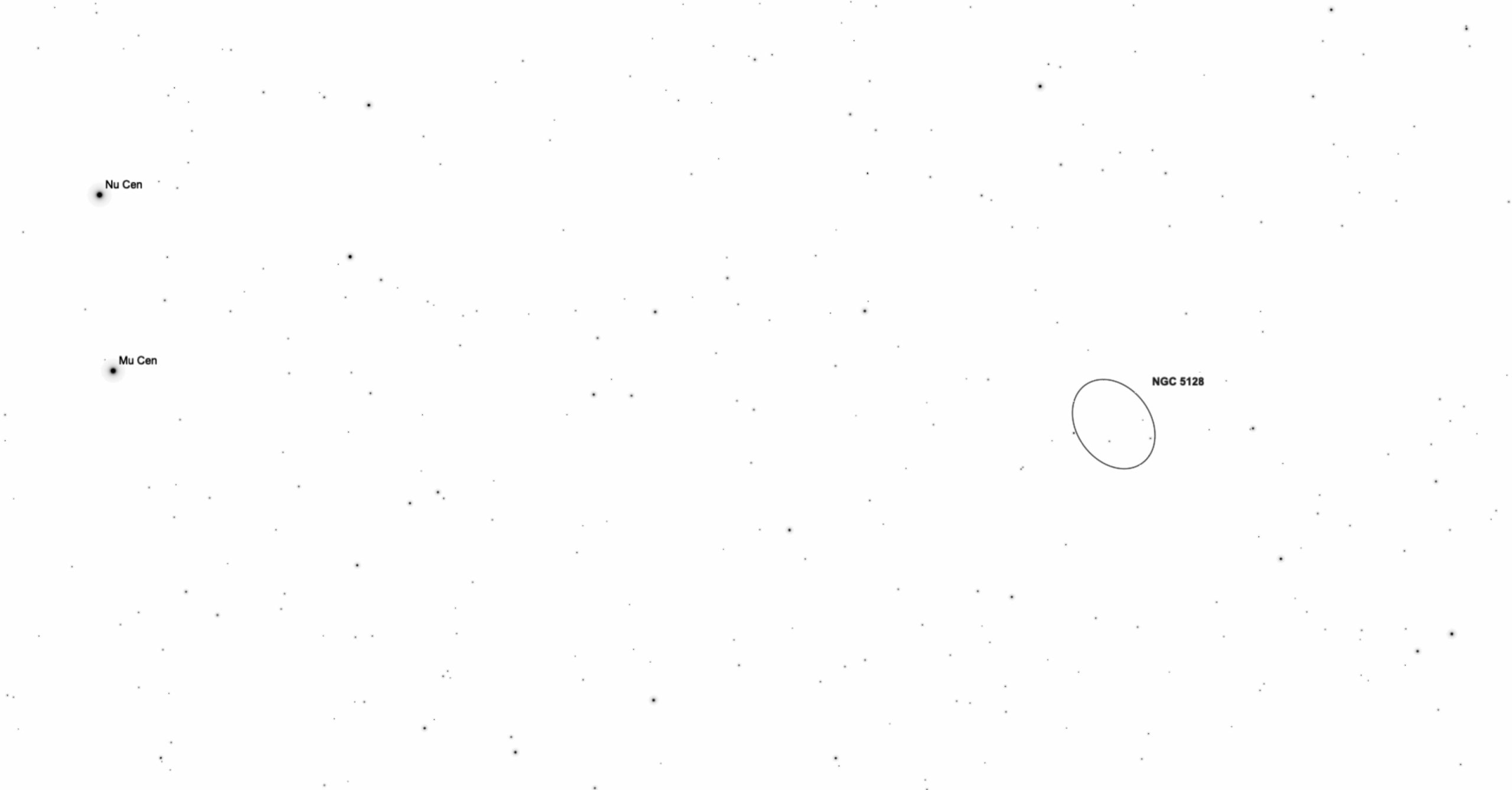
Upside-down view – This is what reflectors and magnifying finders show, and refractors / Cassegrains without a star diagonal
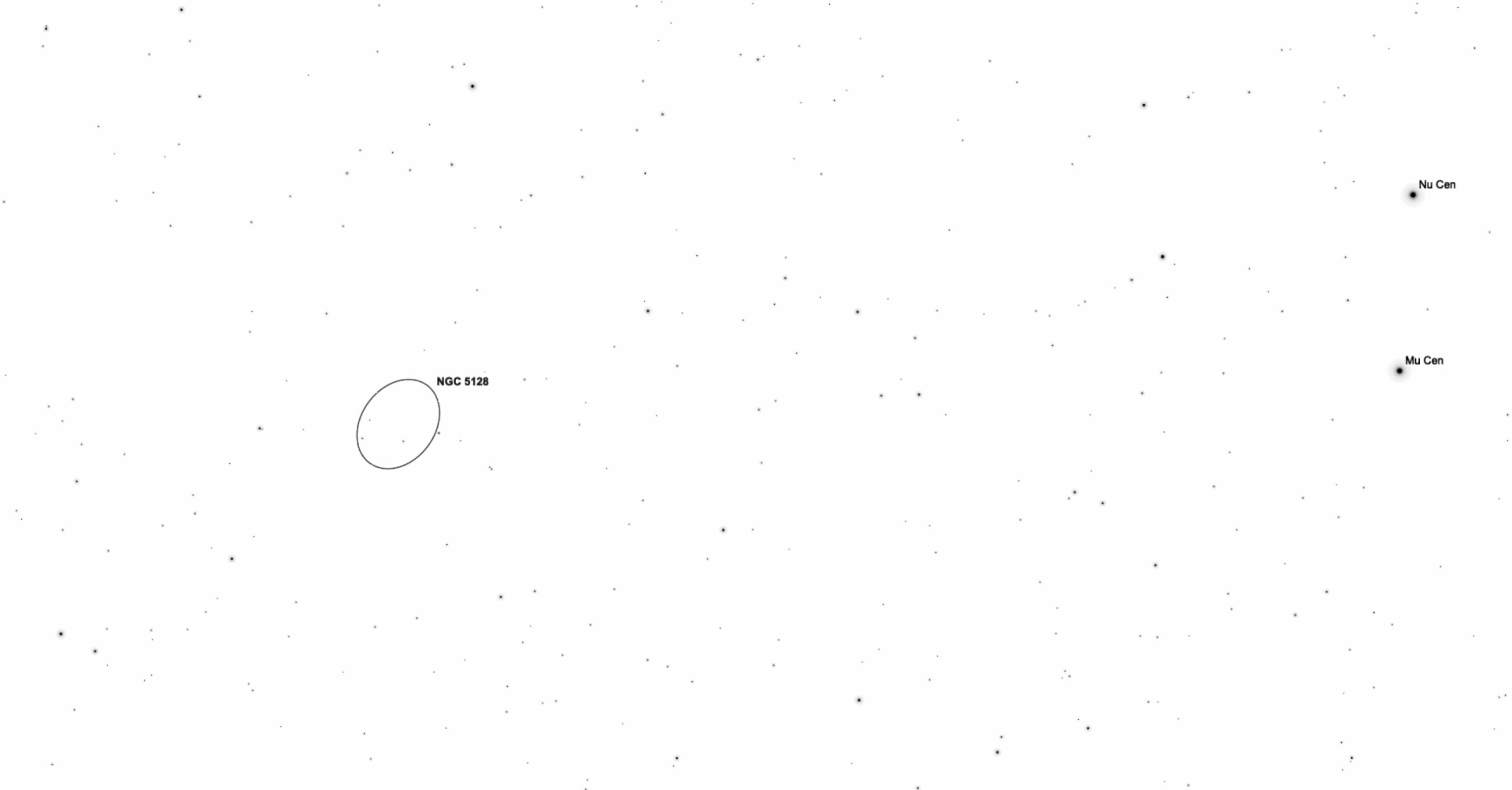
Mirrored View – Refractors and Cassegrain models with a star diagonal show this view
Observatio
A lenticular galaxy is midway between a spiral and elliptical type, and that’s what this distant world appears to be. It’s strange appearance is the result of a collision and subsequent merger of two galaxies millenia ago. Scientists believe this has triggered star formation and Hubble’s revealed a dozen relatively young globular clusters to back this up.
With a dark sky and a more southerly aspect, even a modest telescope reveals the elliptical glow from this millions upon millions of stars in this bright galaxy.
Higher magnification reveals more detail, in particular the dust lane that splits this object into two distinct halves. It runs southeast-northwest on its brightest axis.
PDFs for Printing
Each of the star maps above is reproduced as a pdf below. Each star map has a number in [square brackets] beneath it which corresponds to the file number below. If you want image [C77-1], for example, click the ‘download’ button next to it below and you’ll be able to open it as a printable pdf.